Are you looking for a premium Wagyu experience in Da Nang? Red Sky and other top restaurants are the perfect destinations for those who appreciate exquisite flavors and luxurious surroundings. Let’s explore the best places to enjoy the finest premium steaks in this beautiful coastal city!
This article will introduce you to a restaurant with beefsteak offering perfect taste, especially premium Wagyu beef. In Da Nang, you can easily find places serving beefsteak, but Red Sky Da Nang stands out with its juicy, tender, and flavorful steaks. Let’s learn more about Red Sky!
I. Introduction to Wagyu
Wagyu is a renowned Japanese beef, famous for its high quality and exceptional taste. The even distribution of fat within the muscle creates beautiful marbling, making the meat tender and juicy – something not found in other types of beef. Wagyu can be prepared in various dishes, but steak is the most popular and delicious way to enjoy its superb flavor.
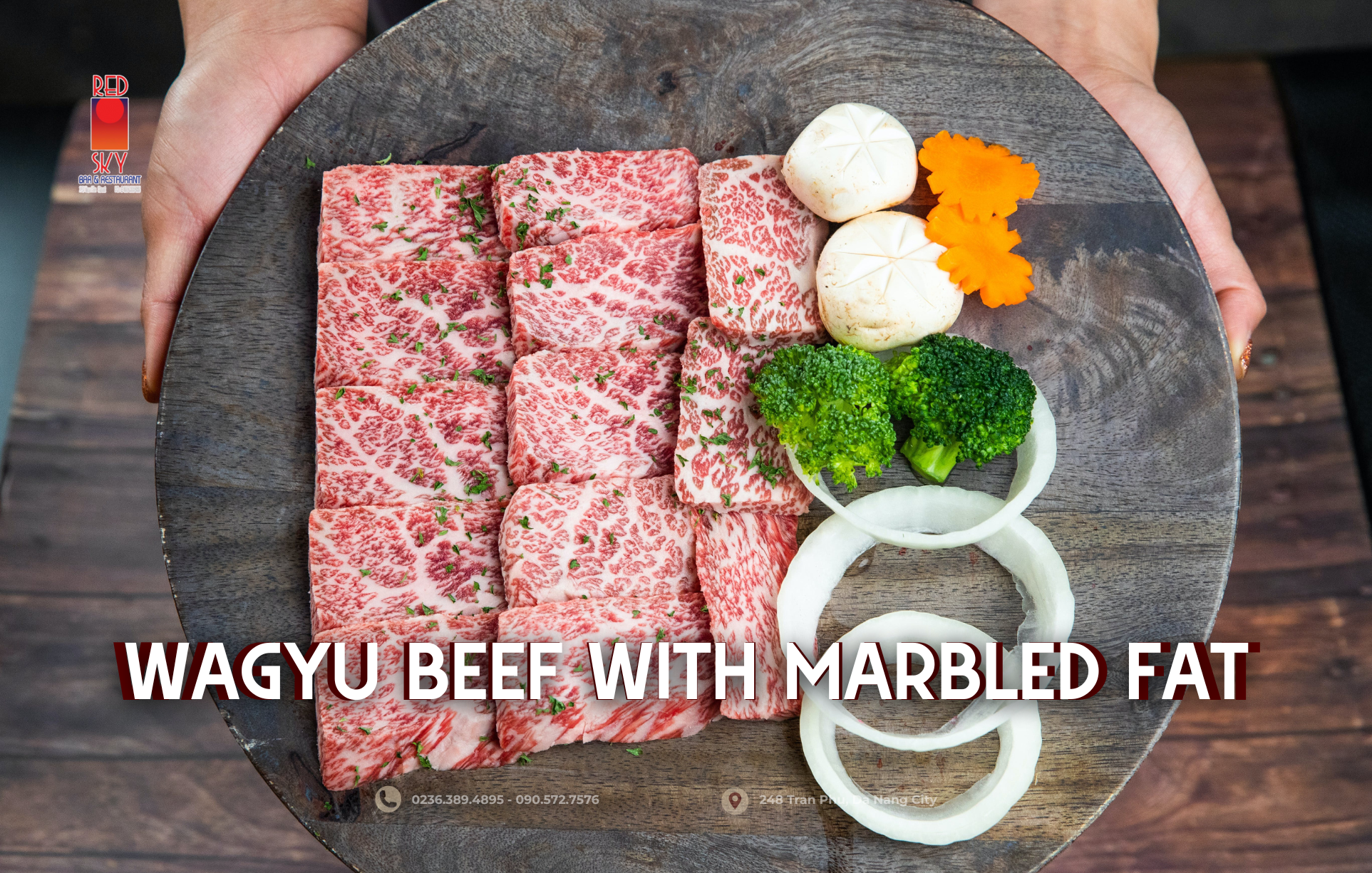
Wagyu beef with marbled fat
1.1. Classification
There are different types of Wagyu depending on the breed and production region. Each type has unique characteristics regarding tenderness, fat content, and flavor. The main types are:
– Kobe Beef: The most famous, produced in the Kobe region of Japan.
– Matsusaka Beef: Another premium variety from Japan.
– Ohmi Beef: Produced in the Shiga region and also highly popular.
1.2. Nutritional Value
– Wagyu is not only delicious but also rich in nutrients, including beneficial unsaturated fats.
– It is packed with high-quality protein, B vitamins, omega-3 and omega-6 fatty acids, and minerals like iron and zinc.
– It helps improve cardiovascular health and provides a nourishing meal.
II. Red Sky Da Nang – An Ideal Destination for Steak Lovers
2.1. Introduction to Red Sky
Red Sky Bar & Restaurant is the first restaurant in Da Nang to cater to international visitors, known for its distinctive Western menu and rich flavors. With a strong reputation in Da Nang, the restaurant has been serving customers since June 2010 and is highly praised for its quality and service.
Specializing in Western cuisine, particularly premium beefsteak with perfect taste, Red Sky also offers a wide selection of wines and high-end drinks at the bar. It’s an ideal venue for dates, gatherings with friends, or family celebrations.
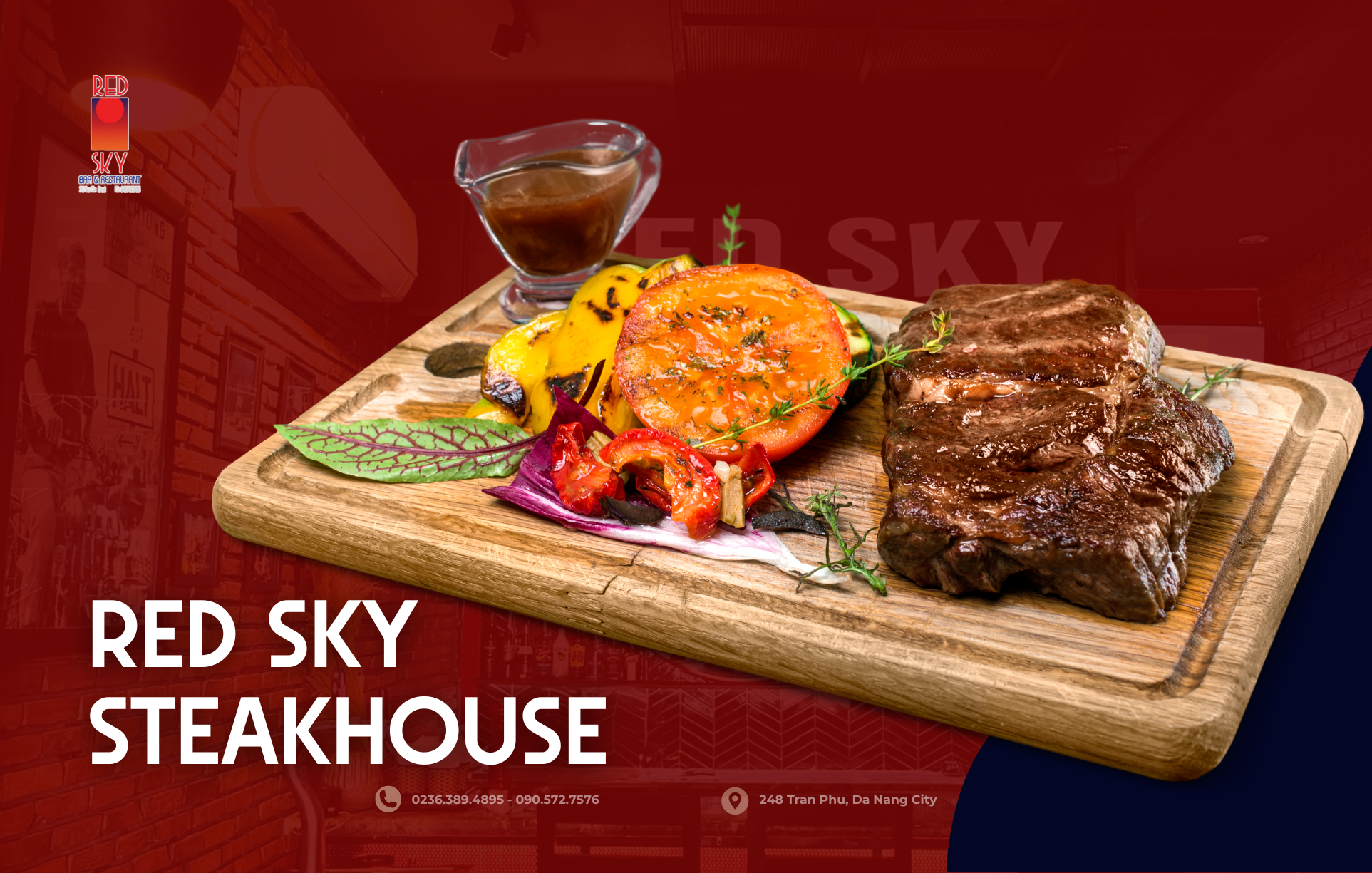
Red Sky Steakhouse
2.2. Ambiance
– Red Sky offers a modern, elegant space with warm lighting and refined interior decor, creating an ideal atmosphere for enjoying fine dining.
– The restaurant has private spaces for parties and an open area for those who enjoy a lively, relaxed ambiance.
– Spacious dining areas, a well-equipped bar, private rooms for small events, and a refreshing outdoor patio, all situated in the heart of Da Nang.
– Located in a prime spot with a beautiful sea view, making it the perfect setting to enjoy your meal and relax.
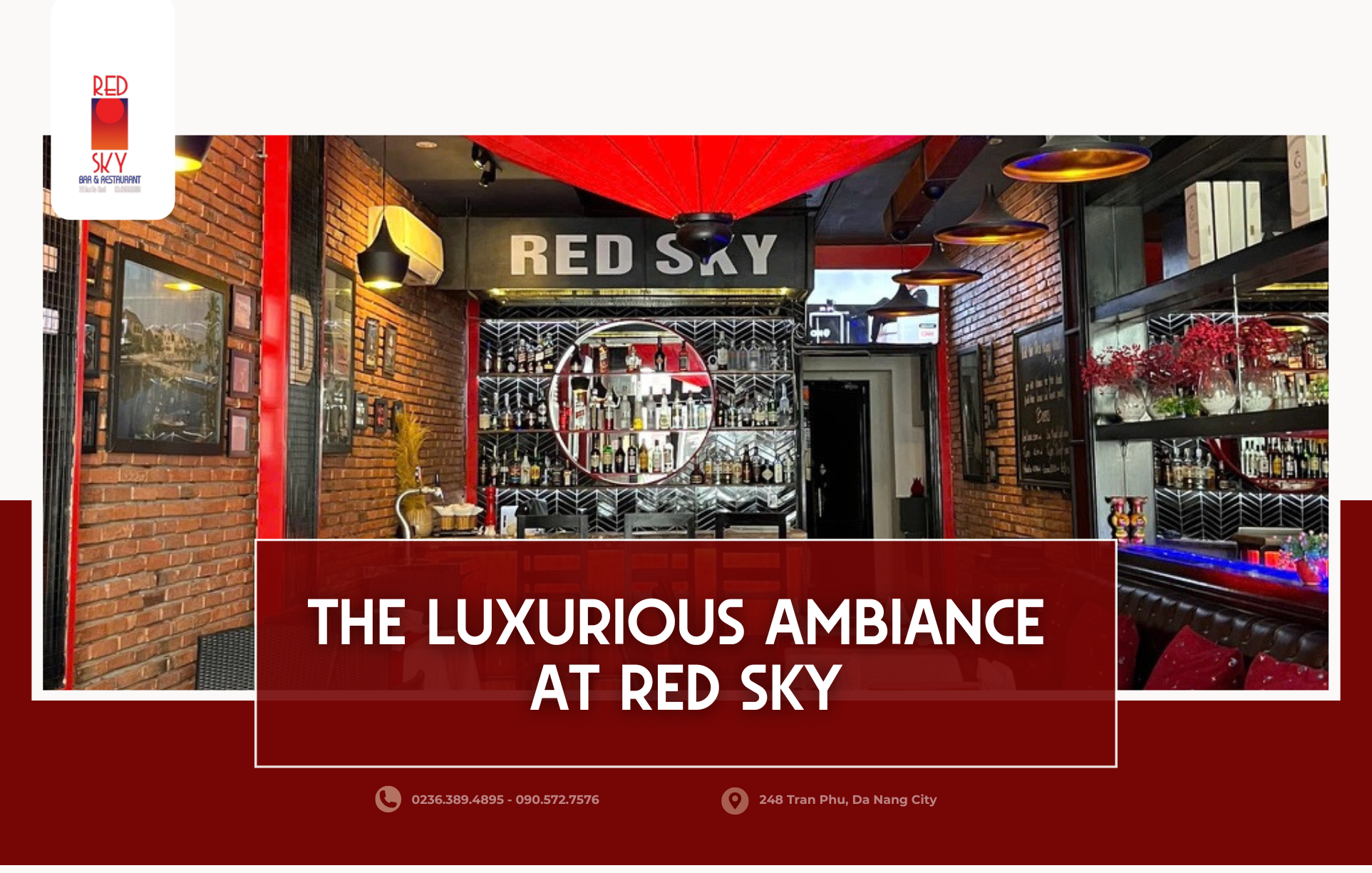
The luxurious ambiance at Red Sky
2.3. Menu
– The menu at Red Sky is diverse, featuring many delicious dishes, but the standout offerings are the premium steaks.
– Notable dishes like Tomahawk steak, Ribeye steak, and Tenderloin steak are perfectly prepared, delivering rich and tender flavors.
– In addition to beefsteak, Red Sky also serves pasta, soups, salads, side dishes, and a variety of sauces.
– The culinary team ensures that each piece of meat is fresh, delicious, and maintains its special flavor.
For more on the menu, click here: https://redskydanang.com.vn/food-cat/food/
2.4. Dining Experience
– With a professional, dedicated team knowledgeable about premium steaks, Red Sky meets all customer requirements.
– Guests are impressed by the professionalism and enthusiasm of the staff, who are always ready to serve.
– Everyone praises the elegant and cozy ambiance, which creates a relaxing and pleasant atmosphere for diners.
– It is the perfect place to enjoy exquisite steaks, complemented by the beautiful setting and a serene atmosphere.
III. Types of Wagyu at Red Sky
– Wagyu Tomahawk for 2-3 People
Description: A Tomahawk steak cut from the rib section, with thick marbling fat, providing a rich and tender flavor. Perfect for those who enjoy beef cooked to medium, keeping it juicy.
Price:
1.4kg – 3,900,000 VND
1.6kg – 4,400,000 VND
1.8kg – 4,900,000 VND
– Meat Lover’s Platter (for 2 people)
Description: A platter featuring 200g of beef ribs, 200g of tenderloin, and two pieces of lamb ribs, offering a variety of flavors for guests who enjoy sampling different cuts.
Price: 1,950,000 VND
– Wagyu Tenderloin from Japan, 5RD grade MB 8/9
Price: 300g – 1,850,000 VND
– Australian Wagyu Tenderloin M6/7
Description: A high-end cut with dense marbling, offering exceptional tenderness. The meat is sweet, fatty, and has a perfect soft texture.
Price:
250g – 1,150,000 VND
350g – 1,480,000 VND
– Australian Wagyu Tenderloin MB 7/8
Description: Featuring moderate marbling, providing a rich, fatty flavor without being overwhelming. It’s a great choice for those who seek a harmonious balance between quality and value.
Price:
300g – 1,500,000 VND
400g – 1,950,000 VND
IV. Conclusion
If you’re looking for a place to enjoy premium Wagyu Tomahawk in Da Nang, Red Sky Da Nang is certainly an excellent choice. With its luxurious ambiance, diverse menu, and superior food quality, it’s the ideal spot to indulge in premium dining and experience top-tier cuisine. Don’t miss the chance to visit Red Sky and savor the finest steaks in this beautiful coastal city!
REDSKY BEST STEAK IN TOWN !!
Phone: 0236. 3894895 – 0905. 727576
Address: 248 Tran Phu, Da Nang City
Email: redskydanang@gmail.com
Fanpage: https://www.facebook.com/redskysteakhouse
Website: https://redskydanang.com.vn
